
CodeMark Certification: Why Current, Valid Certification Matters For Your Next Project
Current CodeMark certification plays an important role in building product compliance and specification confidence. This article explains why certificate validity matters, what to check before relying on a CodeMark Certificate of Conformity, and how expiry dates, supporting documentation and manufacturing locations can impact product selection and project risk.
IN SUMMARY
When specifying building products, CodeMark Certification can provide valuable confidence around product compliance, reliability and suitability.
If a product is CodeMark Certified, it:
- provides evidence of suitability requirements of the BCA
- ensures it is capable of performing as intended
- streamlines the building consent and inspection process
- is listed on the Joint Accreditation System of Australia and New Zealand (JASANZ) register.
However, that depends on the certificate being current, valid and relevant to the product and intended application.
Architects, builders, certifiers, developers and project teams should always check the details before relying on any CodeMark Certificate of Conformity.
Throughout this article, we explain:
- what CodeMark certification is
- why current validity matters
- what to check before relying on a certificate
- why date of expiry, provisions and manufacturing location matter
- how expired certificates can create unnecessary project risk
- why we place such a strong emphasis on current compliance documentation
A CodeMark Certificate isn’t just a logo. It’s a compliance tool that should be checked carefully before it’s relied on to support product selection, specification or approval.
What is CodeMark Certification?
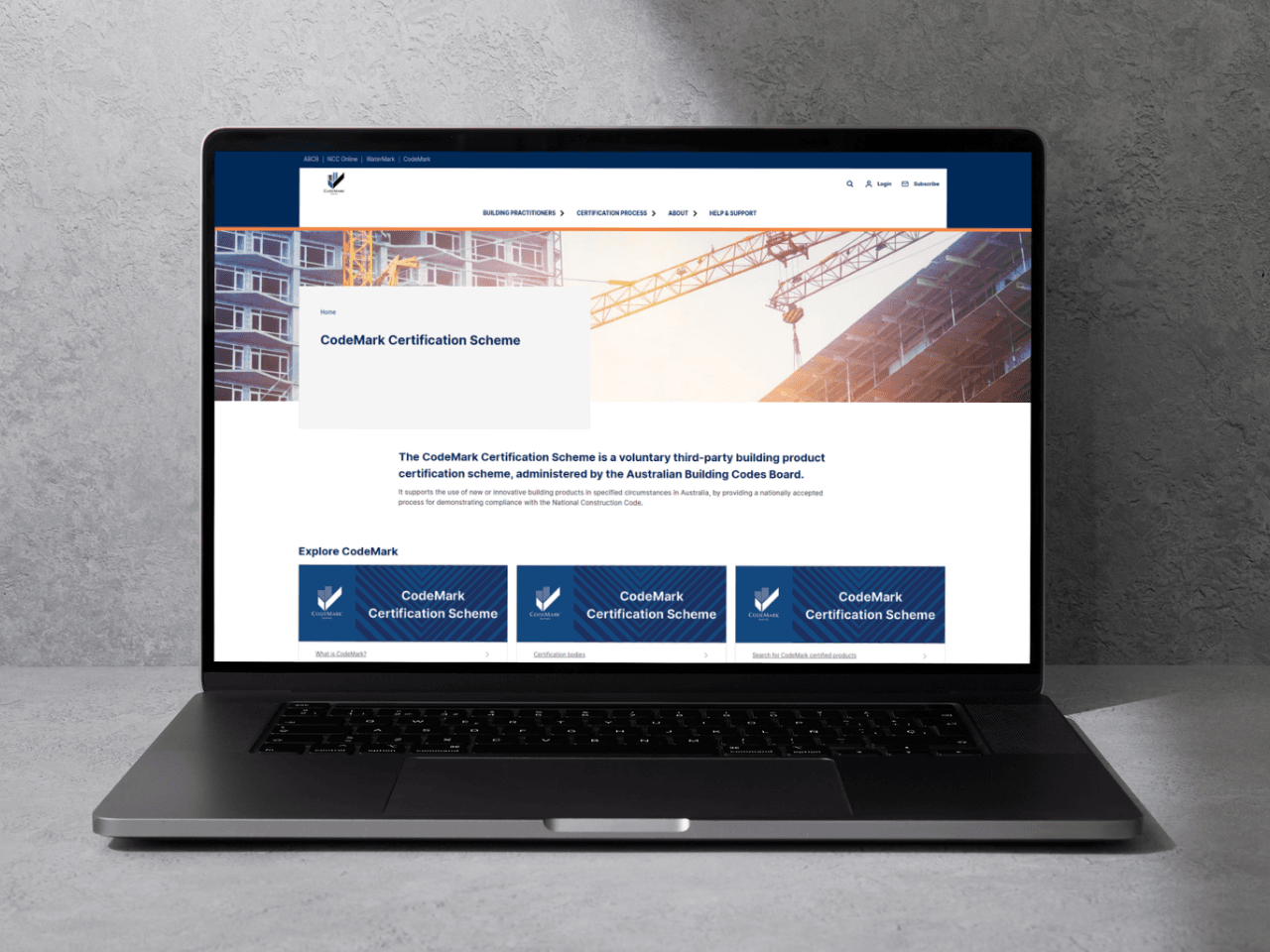
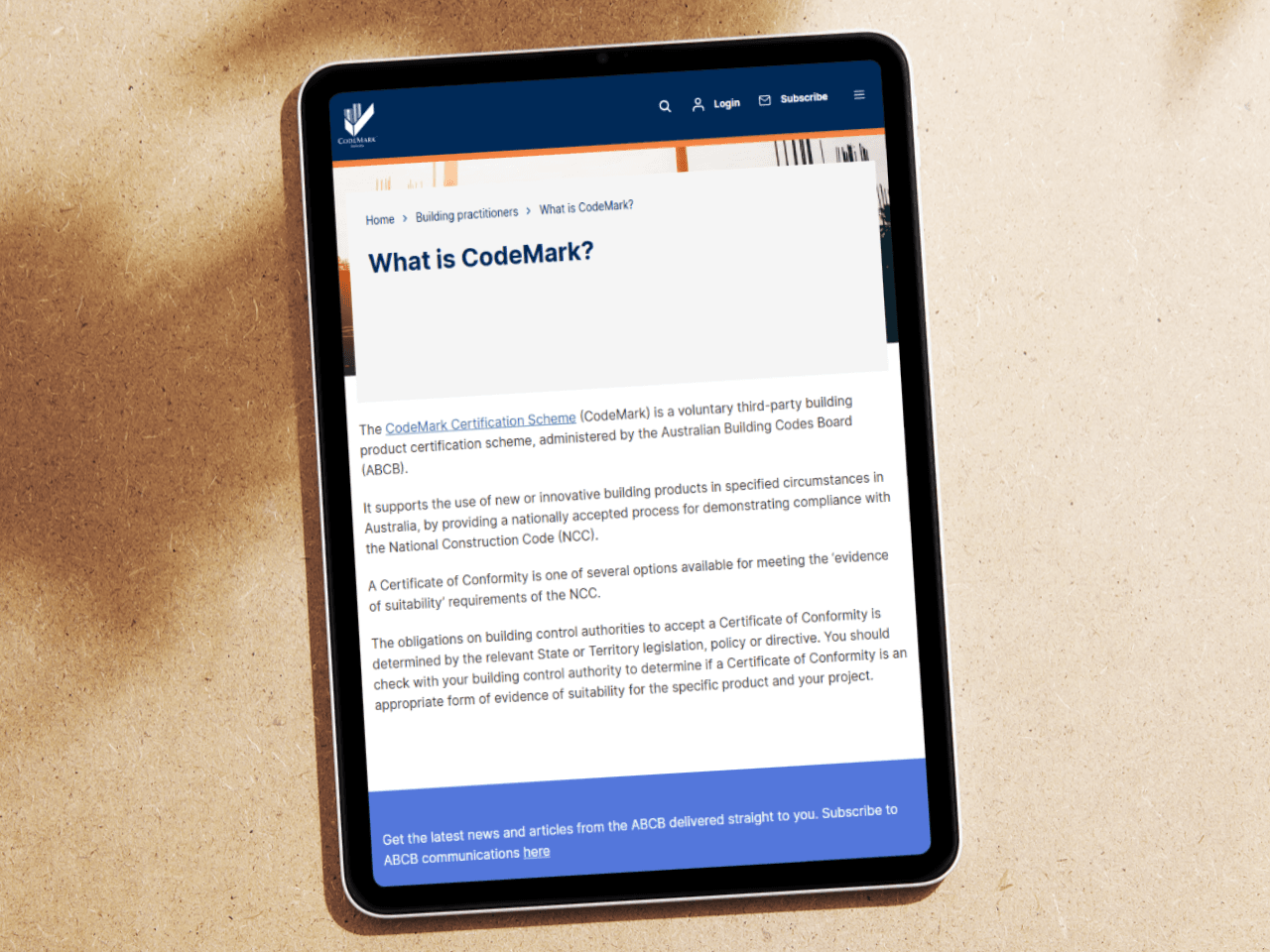
CodeMark is a third-party building product certification scheme.
In practical terms, a CodeMark Certificate of Conformity helps demonstrate how a product complies with specified requirements of the National Construction Code (NCC).
For architects, builders, certifiers and specifiers, this makes product assessment far easier as the certification provides independent evidence that the product has been reviewed thoroughly against a defined criteria list.
You can search the CodeMark register here to see if the product you’re choosing has a current Certificate of Conformity.
However, it’s important to understand what the certificate does and doesn’t do.
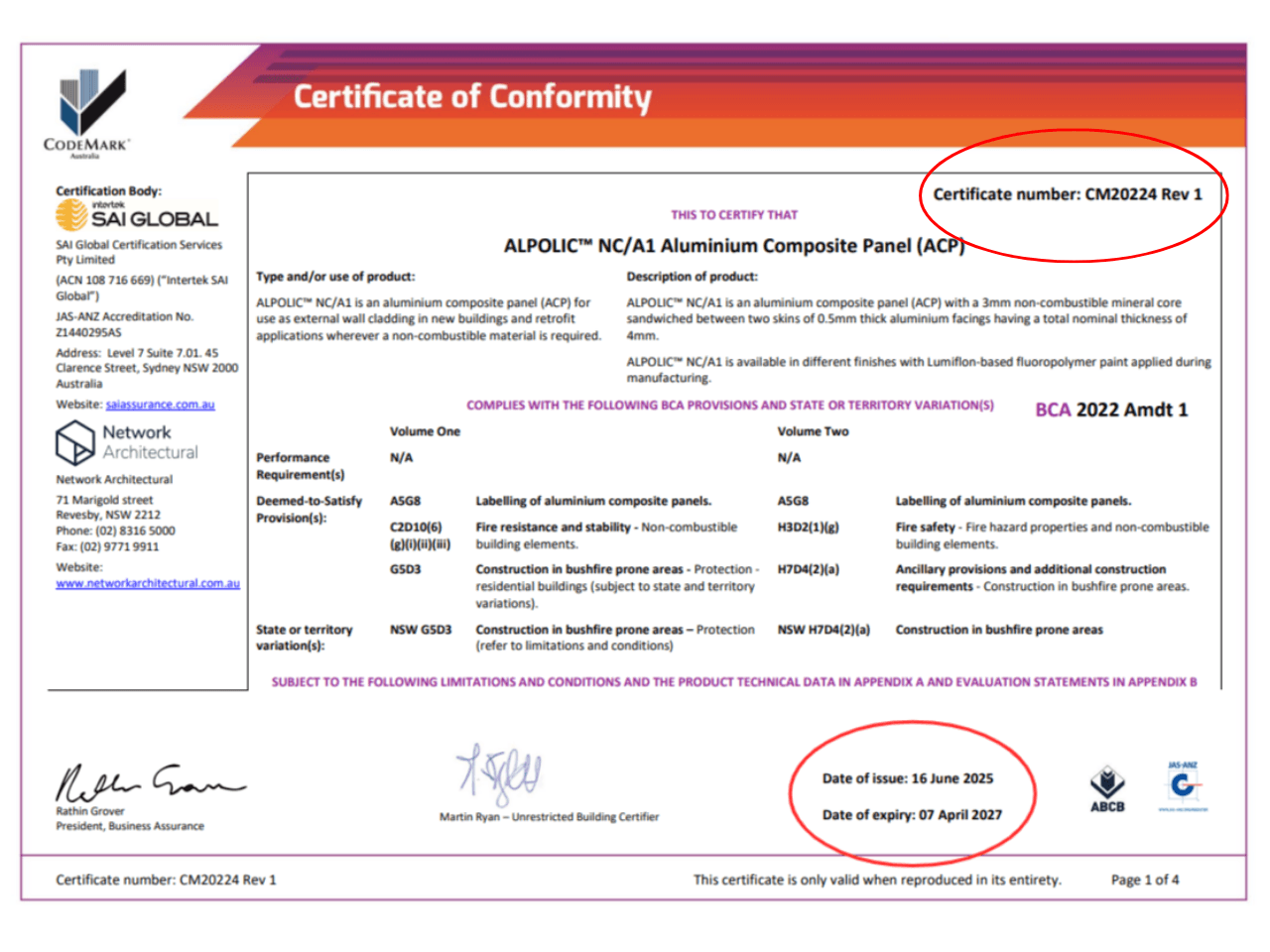
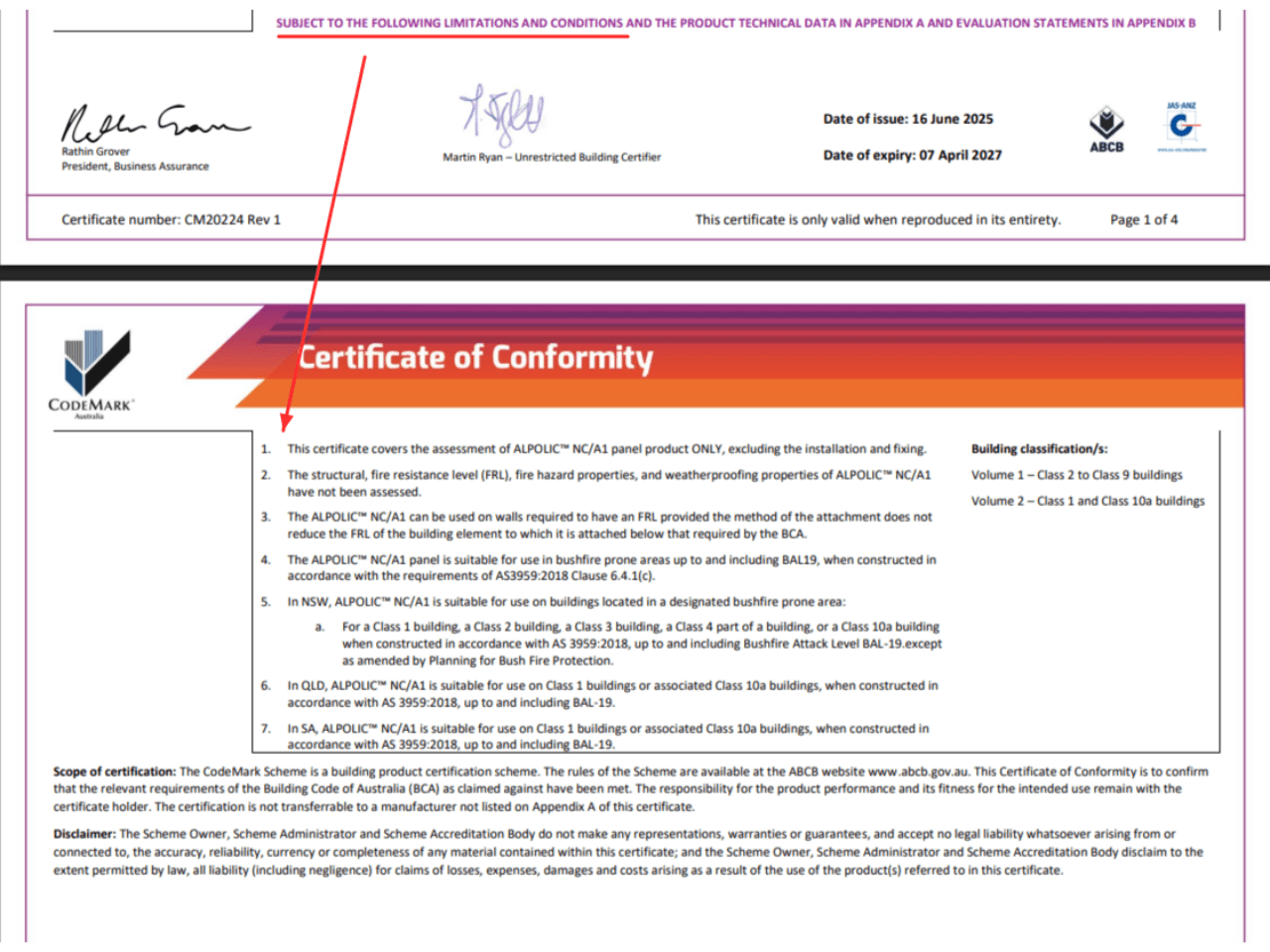
A valid CodeMark Certificate should be read carefully because it will set out:
- the product being certified
- the certificate holder
- the certificate number
- the issue date and expiry date
- the relevant NCC or BCA provisions
- the scope of certification
- limitations and conditions
- supporting documentation
- manufacturing location details
CodeMark Certification is only useful when the certificate is current, accurate and applied within its stated scope.
Why a current CodeMark Certification is important
A CodeMark Certificate isn’t something that should be checked once and assumed to apply forever – as it doesn’t.
Official CodeMark Certificates have validity periods. They can expire, be amended, be suspended or be withdrawn.
That means building and construction project teams should always check the current status of a certificate before relying on it for a new or upcoming project, which you can do here: https://codemark.abcb.gov.au/building-practitioners/check-products.
If a CodeMark Certificate has expired and hasn’t been renewed, it shouldn’t be represented or relied upon as a current CodeMark Certificate for future work.
This is important as specifications, compliance requirements and project approvals depend on accurate and current documentation.
Before signing off on any material, we recommend checking:
- Is the CodeMark Certificate current?
- Has the certificate expired?
- Has it been suspended or withdrawn?
- Does the certificate match the product being supplied?
- Does it apply to the intended use?
- Are the limitations and conditions understood?
- Is the manufacturing location correctly listed?
This is a simple check, but it can make a significant difference to project confidence while mitigating potential project risk.
What should you check before relying on a CodeMark Certificate?
Not all project risk comes from the product itself. Sometimes, risk comes from relying on incomplete, lapsed, expired or misunderstood documentation.
So, before relying on a CodeMark Certificate of Conformity, we recommend checking five key areas.
1. Check the CodeMark Certificate number
Every certificate should have a clear certificate number.
For example, Network Architectural’s current Australian CodeMark certificates include:
- ALPOLIC™ NC/A1: Certificate number CM20224 Rev 1
- ALPOLIC™/fr: Certificate number CM20223 Rev 1
At the time of writing this (Sept 2026), these Certificate numbers were current.
You can check the currently valid CodeMark Certificates here: https://register.jasanz.org/certified-organisations
2. Check the date of expiry
The date of expiry tells you whether the CodeMark Certificate is current.
If the certificate has expired, it shouldn’t be treated as current evidence for a new project unless it has been renewed or replaced with an updated certificate.
You can review this here: https://codemark.abcb.gov.au/building-practitioners/check-products
3. Check the provisions
A certificate doesn’t automatically mean a product is suitable for every building, every application or every installation method.
The provisions, conditions and limitations need to be read carefully.
For more, read the CodeMark Scheme rules here: https://codemark.abcb.gov.au/about-codemark/scheme-rules
4. Check the supporting documents
The certificate may reference technical manuals, test reports, installation requirements or other supporting documentation.
Those documents should be available from the manufacturer or supplier. Make sure you request this documentation from them directly to be certain of your choice.
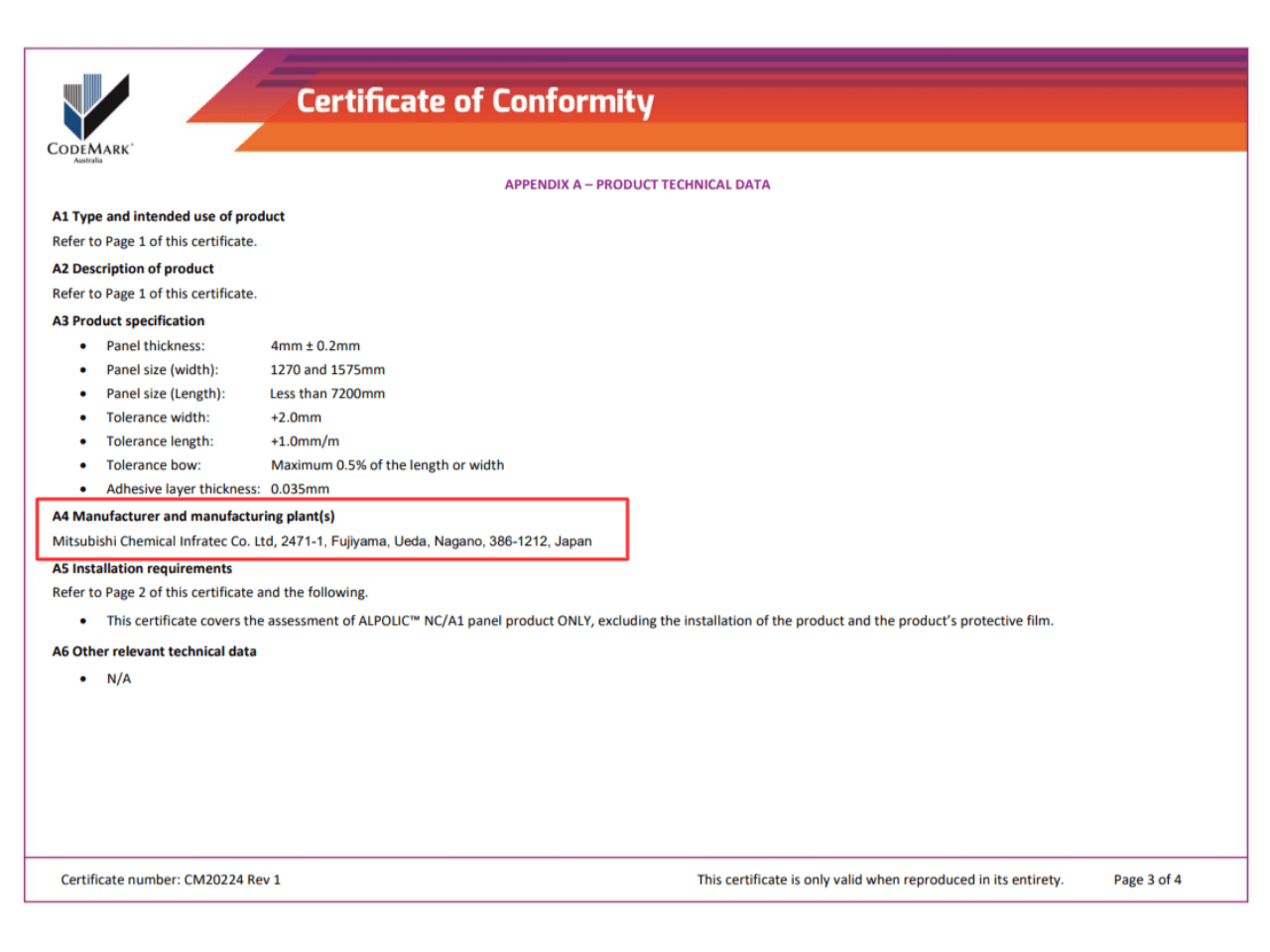
5. Check the manufacturing plant location or country of origin
Manufacturing plant location details are also very important.
If a product has multiple manufacturing locations, the CodeMark Certificate should accurately identify the relevant manufacturing plant or location.
The product ordered and supplied should match the certified product and the manufacturing details listed.
Why expired certification creates unnecessary project risk
Using an expired CodeMark Certificate can create confusion for everyone involved in the building chain. It’s also misleading and goes against the CodeMark scheme’s rules.
Architects, builders, certifiers, surveyors and project managers all rely on documentation to support decisions. If that documentation is no longer current, it may create unnecessary project risk.
That risk may include:
- delayed approvals
- additional questions from certifiers or authorities
- extra documentation requests
- product substitution concerns
- uncertainty around evidence of suitability
- reputational issues if outdated information is passed on as current
This is why we encourage project teams to check current documentation before product approval or specification. It’s much easier to confirm a certificate at the beginning of the process than to resolve a documentation issue later.
If a CodeMark certificate has expired, it should not be relied on as current certification for an upcoming project.
Why the manufacturing location matters when it comes to a CodeMark Certification
One detail that can be overlooked is the physical manufacturing location.
This is important because some products may be manufactured across multiple sites, and the official certificate may only apply to specific manufacturing plants or locations.
If the CodeMark Certificate lists one manufacturing plant, but the product being supplied comes from somewhere else, that should be clarified before the product is accepted or specified.
For example, if a product is manufactured in China, Japan or another location, the certificate should accurately state the manufacturing plant relevant to that certified product.
Additionally, each manufacturing site is required to be audited annually by the CodeMark Certificate provider to ensure full transparency and traceability.
This isn’t just a small, administrative detail. It helps confirm that the product being supplied is the same product that has been assessed under the certificate.
Before ordering or signing off a product, check:
Is the product being supplied the same product covered by the CodeMark Certificate?

Why Network Architectural prioritises current compliance documentation
At Network Architectural, we understand that product compliance isn’t a “box-ticking exercise”.
It affects specification confidence, project approvals, construction timelines and the trust that architects, builders, certifiers and developers place in the materials they choose.
That’s why we place such a strong emphasis on current, accessible and accurate CodeMark Certification documentation for our systems.
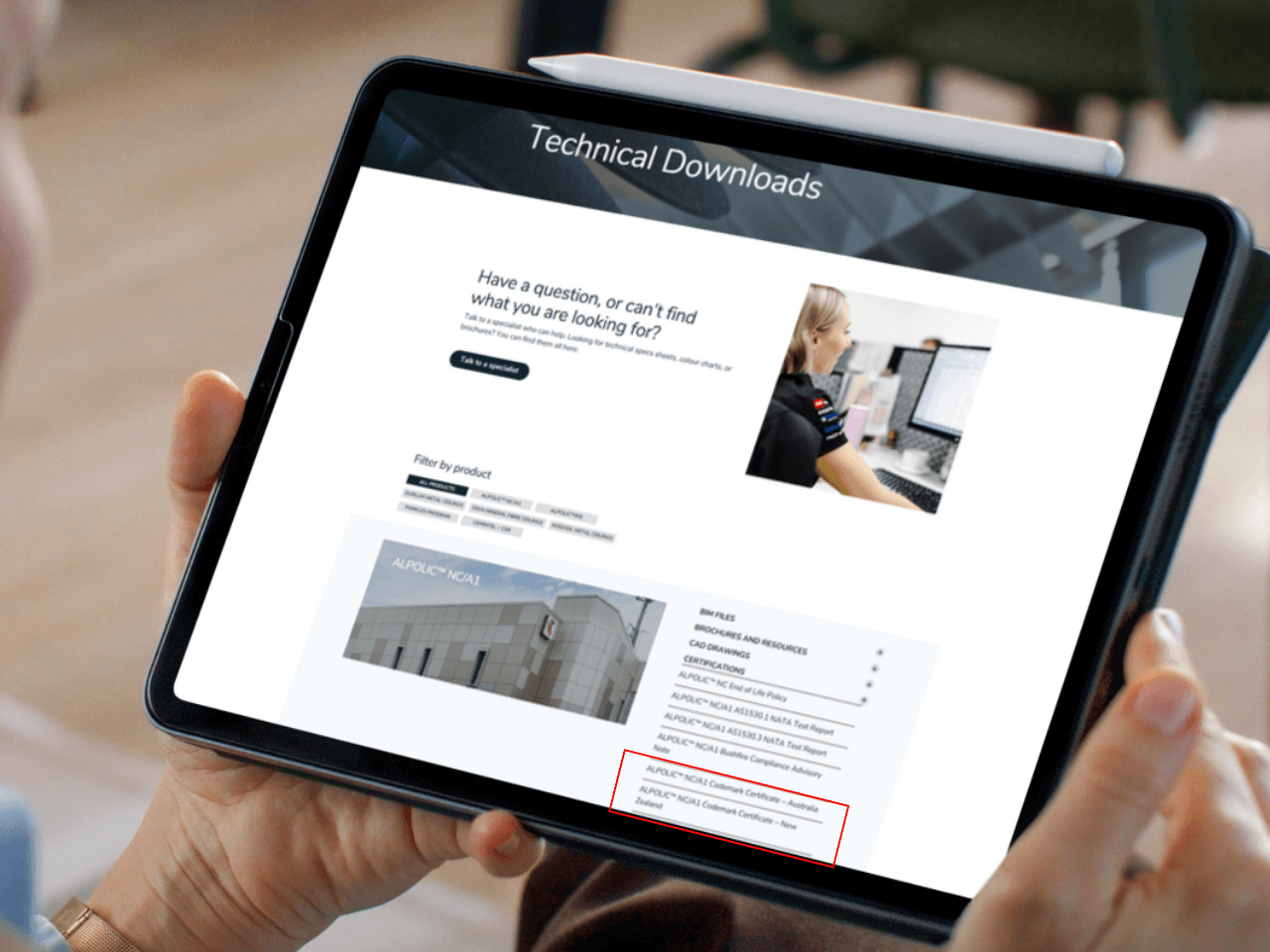
Our technical resources include CodeMark certification documentation for relevant ALPOLIC™ systems, including ALPOLIC™ NC/A1 and ALPOLIC™/fr, along with supporting information such as technical manuals, installation guides, test reports and product data.
We also encourage all project teams to speak with us early if you need help confirming:
- current certificate details
- certificate numbers
- certificate expiry dates
- intended use
- limitations and conditions
- supporting documentation
- manufacturing plant location information
- project-specific product suitability
The earlier these checks happen, the easier it is to support a smoother specification and approval process.
CodeMark Certification should support better decisions
The real value of CodeMark certification isn’t simply having a certificate.
It’s having a current, valid and relevant certificate that helps the building decision-makers make better decisions:
- For architects, it can support specification confidence.
- For builders, it can help confirm that the product being ordered aligns with the required documentation.
- For certifiers and surveyors, it can help clarify how the product has been assessed.
- For developers and asset owners, it can support a more transparent and accountable product selection process.
But this only works when the certificate is checked properly. That means looking beyond the logo and confirming the actual details before choosing a product.
FAQs about CodeMark Certification
What is a CodeMark Certificate of Conformity?
A CodeMark Certificate of Conformity is a third-party certification document that helps demonstrate how a building product complies with specified provisions of the National Construction Code or Building Code of Australia.
Does a CodeMark Certificate last forever?
No. Official CodeMark Certificates have expiry dates and may also be amended, suspended or withdrawn. Always check that the certificate is current before relying on it for an upcoming project.
Can an expired CodeMark Certificate be used for a new project?
If a CodeMark Certificate has expired and hasn’t been renewed, it should not be represented or relied on as a current CodeMark certificate for a future project.
What should I check on a CodeMark Certificate?
Check the certificate number, expiry date, product name, provisions of certification, limitations and conditions, supporting documentation and manufacturing location.
Why does the manufacturing location matter for a CodeMark Certification?
The manufacturing location helps confirm that the product being supplied matches the product assessed under the certificate. That’s why:
- every product with a CodeMark Certificate is required to have its manufacturing plant audited annually to ensure total transparency and traceability.
- this audited manufacturing plant should also be the manufacturing plant information that is listed on the certificate.
Can Network Architectural help with CodeMark documentation?
Yes. Our team can help you access current documentation for our CodeMark-certified systems, including relevant ALPOLIC™ product certificates, technical documents and supporting resources.

Need current CodeMark Certification reassurance for your next project?
When you’re specifying architectural cladding or facade systems, current compliance documentation is important in making better product choices.
At Network Architectural, we can provide you with our current and valid CodeMark Certification documents, technical information and product support for your next project.
Whether you’re an architect, builder, certifier, developer or project consultant, our team can help you understand which documents apply and what details need to be checked before specification or sign-off.
Reach out to our team at Network Architectural for more information about our CodeMark-Certified systems and how we can support your next project.
Related Articles

Customising Residential Facades
Residential architecture is moving beyond standardised facades, with growing demand for customised forms, refined detailing and layered materiality. This white paper explores how Aluminium Composite Materials (ACMs) support design flexibility, durability and compliance, helping architects deliver distinctive residential facades that are both buildable and suited to Australian conditions.

Recladding with Confidence: How the University of Sydney Delivered a Future Proof Façade
When the University of Sydney reclad the Charles Perkins Centre, compliance alone was not enough. This article explores how a premium, maintenance-free façade solution delivered long-term confidence, design integrity and fire compliance, restoring one of the campus’s most recognisable buildings with a future-proof architectural outcome.

Top 5 Residential Facade Trends in 2026 – and How ALPOLIC™ Brings Them to Life
Australian residential facades are evolving, with 2026 trends favouring clean lines, layered materials, natural finishes and bold colour accents. This article explores the top five residential façade trends shaping contemporary homes and how material choice plays a key role in balancing design expression, durability, sustainability and long-term performance.